
Influencer Marketing
Influencer marketing has become one of the most effective digital marketing strategies for businesses looking to increase brand awareness, engage customers, and drive sales. As consumers spend more time on social media platforms, brands are increasingly partnering with influencers to promote their products and services in a more authentic and relatable way.
Influencer marketing involves collaborating with individuals who have built a loyal following on social media platforms such as Instagram, YouTube, Facebook, LinkedIn, and X. These influencers have the ability to influence purchasing decisions because their audience trusts their opinions, recommendations, and experiences. Unlike traditional advertising, influencer marketing feels more personal, making it highly effective in today’s digital landscape.
Benefits of Influencer Marketing
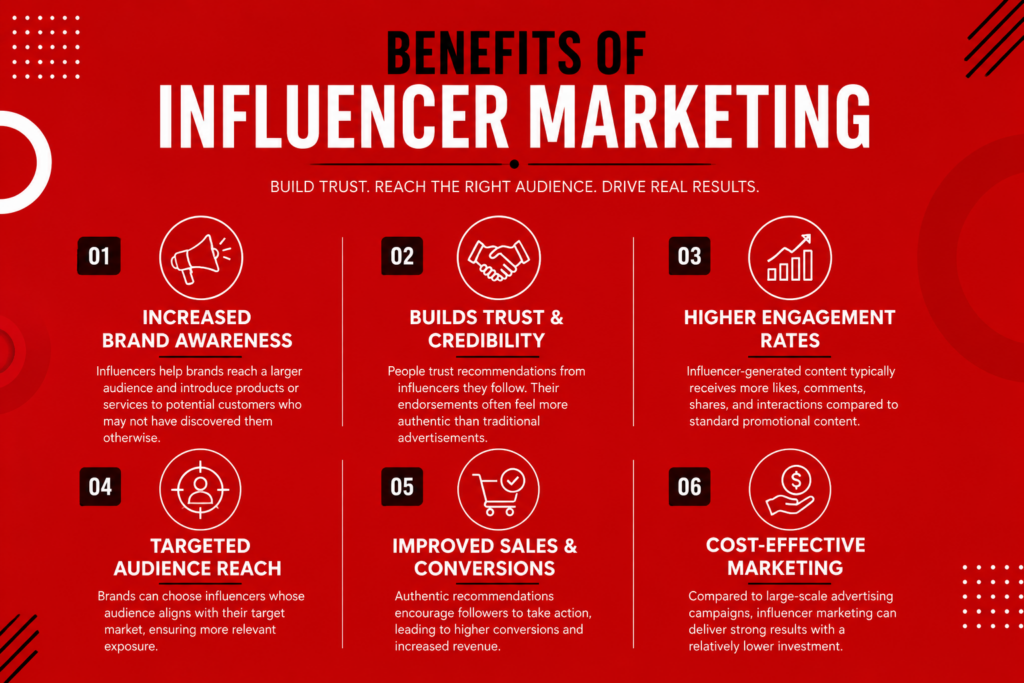
1. Increased Brand Awareness
Influencers help brands reach a larger audience and introduce products or services to potential customers who may not have discovered them otherwise.
2. Builds Trust and Credibility
People trust recommendations from influencers they follow. Their endorsements often feel more authentic than traditional advertisements.
3. Higher Engagement Rates
Influencer-generated content typically receives more likes, comments, shares, and interactions compared to standard promotional content.
4. Targeted Audience Reach
Brands can choose influencers whose audience aligns with their target market, ensuring more relevant exposure.
5. Improved Sales and Conversions
Authentic recommendations encourage followers to take action, leading to higher conversions and increased revenue.
6. Cost-Effective Marketing
Compared to large-scale advertising campaigns, influencer marketing can deliver strong results with a relatively lower investment.
Types of Influencer Marketing
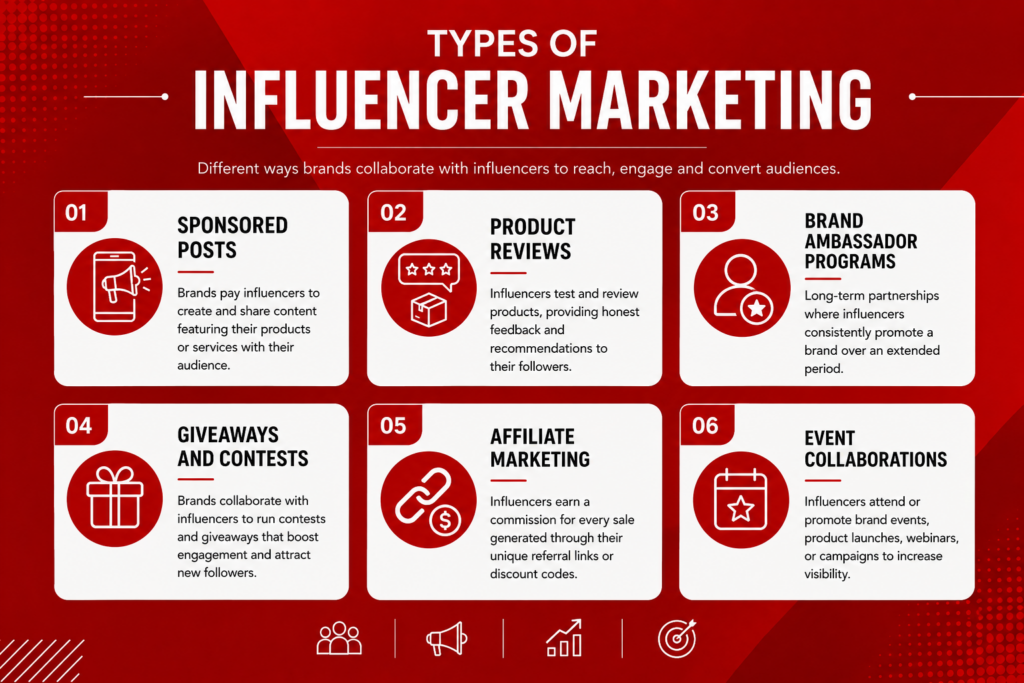
1. Sponsored Posts
Brands pay influencers to create and share content featuring their products or services with their audience.
2. Product Reviews
Influencers test and review products, providing honest feedback and recommendations to their followers.
3. Brand Ambassador Programs
Long-term partnerships where influencers consistently promote a brand over an extended period.
4. Giveaways and Contests
Brands collaborate with influencers to run contests and giveaways that boost engagement and attract new followers.
5. Affiliate Marketing
Influencers earn a commission for every sale generated through their unique referral links or discount codes.
6. Event Collaborations
Influencers attend or promote brand events, product launches, webinars, or campaigns to increase visibility.
Best Practices for Successful Influencer Marketing
To achieve success, businesses should focus on selecting influencers who align with their brand values and target audience. Instead of only considering follower count, brands should evaluate engagement rates, content quality, and audience authenticity.
Providing influencers with creative freedom helps maintain authenticity and improves campaign performance. Businesses should also set clear objectives and track metrics such as reach, engagement, website traffic, leads, and conversions to measure success.
Conclusion
Influencer marketing has transformed the way brands connect with consumers. By leveraging the trust and influence of content creators, businesses can increase brand awareness, engage their target audience, and drive sales effectively. Whether through sponsored posts, product reviews, affiliate partnerships, or brand ambassador programs, influencer marketing offers businesses a powerful opportunity to grow in the digital world. With the right strategy and influencer partnerships, brands can build lasting customer relationships and achieve long-term success.